Beyond the Transcript: The Hidden Administrative Records That Can Surface When You Least Expect It
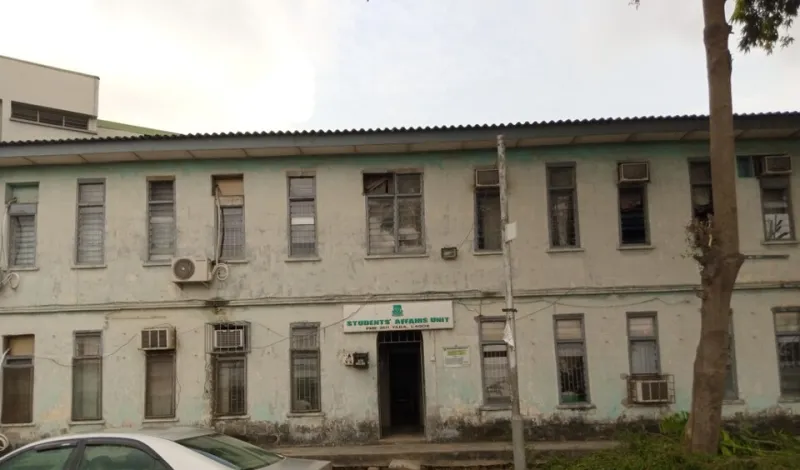
Photo: Official alade, CC BY-SA 4.0, via Wikimedia Commons
For most students, the official transcript represents the totality of what their college knows about them academically—a clean, formatted document listing courses, grades, and degrees conferred. It is the artifact they submit to employers, graduate programs, and licensing boards. It is the record they believe defines them in the eyes of those institutions.
That belief is incomplete.
Beyond the transcript, colleges maintain a separate and largely invisible layer of administrative documentation. These records—covering conduct proceedings, academic integrity violations, financial obligations, and institutional sanctions—do not appear on the standard transcript. But under specific circumstances, they can surface in ways that carry significant professional and academic consequences.
What Lives Outside the Official Transcript
US colleges and universities are complex administrative entities, and they generate documentation across multiple departments that operate independently of the registrar's office. The official transcript is the registrar's product. But student affairs offices, judicial or conduct boards, financial services departments, and academic integrity committees all maintain their own records.
The categories of documentation most likely to affect students beyond graduation include the following.
Conduct and disciplinary records. When a student is found responsible for a violation of the student code of conduct—whether related to academic integrity, behavioral misconduct, or campus policy—the outcome is recorded in a conduct file maintained by the institution's student affairs or dean of students office. Depending on the severity of the finding and the sanction imposed, this record may be retained for years after graduation.
Academic integrity violation records. Many institutions maintain a separate academic integrity registry that tracks alleged and confirmed violations across departments. A student who received a warning or was placed on academic integrity probation may have a notation in this registry even if no grade change appeared on their transcript.
Financial holds and outstanding obligations. Unpaid library fines, parking citations, emergency loan balances, or housing charges can generate administrative flags in a student's account. While these do not affect the transcript directly, they can trigger holds that prevent the institution from releasing records or confirming enrollment—effectively creating a verification problem at precisely the moment a student needs documentation.
Institutional sanctions short of suspension or expulsion. Formal warnings, probationary statuses, and deferred suspensions are recorded administratively but do not always generate a visible notation on the official transcript. Students may be unaware that such records exist or that they are retained beyond graduation.
What Institutions Can Legally Disclose
The Family Educational Rights and Privacy Act (FERPA) governs the disclosure of student educational records maintained by institutions receiving federal funding—which includes virtually all accredited US colleges and universities. Under FERPA, institutions generally cannot release student records to third parties without written consent from the student.
However, FERPA's protections are more nuanced than many students realize.
First, FERPA applies to educational records, not to all information a college possesses. If a conduct proceeding resulted in a criminal referral, law enforcement records created by a campus police department may be treated separately from educational records and subject to different disclosure rules.
Second, FERPA permits disclosure without consent in specific circumstances—including to other educational institutions where a student seeks to enroll, to comply with a judicial order or lawfully issued subpoena, and in connection with health or safety emergencies. A graduate program or professional licensing board that asks an institution directly about a student's standing may receive information that the student did not anticipate disclosing.
Third, FERPA does not prevent institutions from confirming that a student was found responsible for a violation if that student has signed a release—which is frequently required as part of graduate school applications, professional licensing applications, or employment background checks. Many of these applications include questions that ask applicants to self-disclose conduct violations, and the institution may be contacted to verify the accuracy of the response.
Background Checks and the Institutional Inquiry
Commercial background check providers do not typically have direct access to a college's conduct records. However, background investigations conducted for professional licensing—particularly in fields such as law, medicine, nursing, financial services, and education—frequently include a step in which the licensing body contacts the institution directly and requests verification of the applicant's standing.
These verification requests often go beyond the standard enrollment and degree confirmation. They may ask whether the applicant was subject to any disciplinary action, whether any academic integrity findings were recorded, and whether the institution is aware of any conduct that would bear on the applicant's fitness for licensure.
Institutions respond to such inquiries in ways that vary considerably. Some provide only the information the student has consented to release. Others interpret their disclosure obligations more broadly when a licensing body with statutory authority makes the request. The inconsistency itself is a risk factor that students rarely account for.
How to Identify and Address Problematic Notations
Students who anticipate high-stakes transitions—graduate school applications, bar exam character and fitness reviews, medical licensing, or federal employment—should take proactive steps to understand what administrative records their institution maintains.
Request your complete student file under FERPA. Students have the right to inspect and review their educational records. This right extends beyond the transcript to include records maintained by the dean of students, conduct boards, and academic integrity offices. Submitting a formal FERPA records request to each relevant office is the most reliable way to identify what documentation exists.
Ask specifically about retention timelines. Conduct records are not retained indefinitely at all institutions. Many colleges have policies under which minor conduct records are purged after a specified period—often three to seven years after the incident or after graduation. Understanding your institution's retention schedule can clarify whether a notation is still active.
Seek expungement or amendment where available. Some institutions have formal processes for requesting that conduct records be expunged or sealed after a designated period, particularly for minor violations where the student has demonstrated rehabilitation. These processes are not universally available, but they are worth pursuing where they exist.
Prepare a disclosure narrative. For applications that require self-disclosure of conduct violations, a carefully prepared written explanation—acknowledging the incident, contextualizing it, and demonstrating growth—can meaningfully reduce the impact of a notation. Licensing boards and admissions committees are accustomed to reviewing such disclosures; an honest, reflective account is far less damaging than an omission that is later discovered.
Consult an attorney before high-stakes disclosures. In contexts involving professional licensing or federal employment, the consequences of incomplete or inaccurate disclosure can be severe. An attorney with experience in professional licensing or education law can help frame a disclosure appropriately and advise on what an institution is likely to share in response to a formal inquiry.
The Records You Cannot See May Still Define You
The official transcript is a carefully curated document. It is also an incomplete one. The administrative layer that exists alongside it—maintained in separate offices, governed by different policies, and accessible under conditions that students rarely fully understand—represents a dimension of the academic record that deserves serious attention.
For students approaching graduation, professional licensing, or graduate admissions, the time to investigate that layer is before it surfaces unexpectedly. Informed students are positioned students. And in a landscape where institutional records can follow a person far beyond the campus gates, informed is the only viable posture.